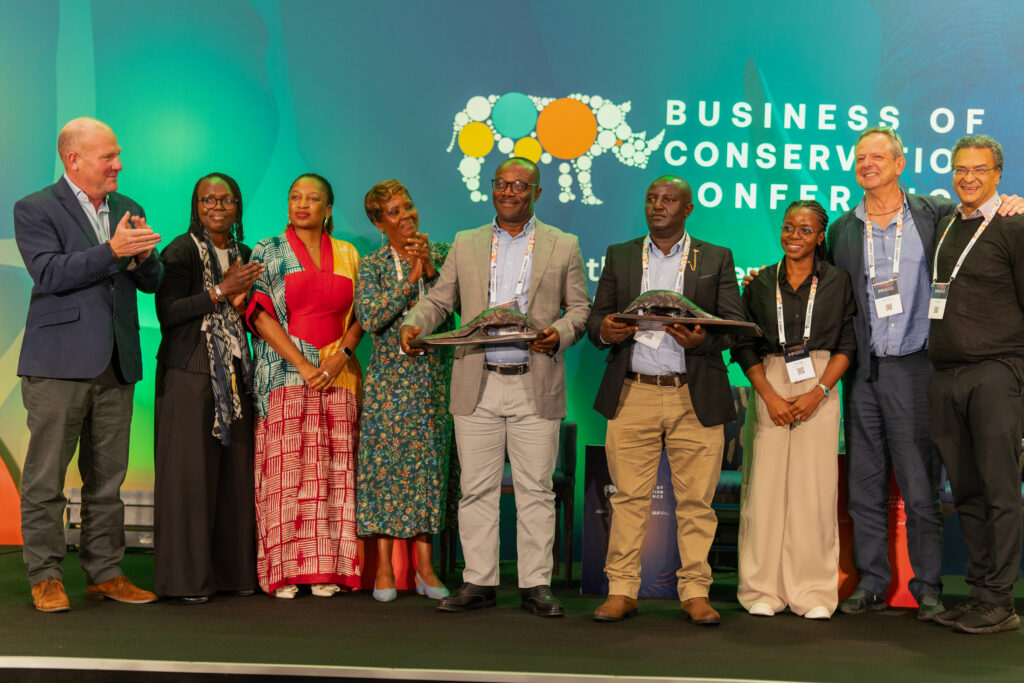
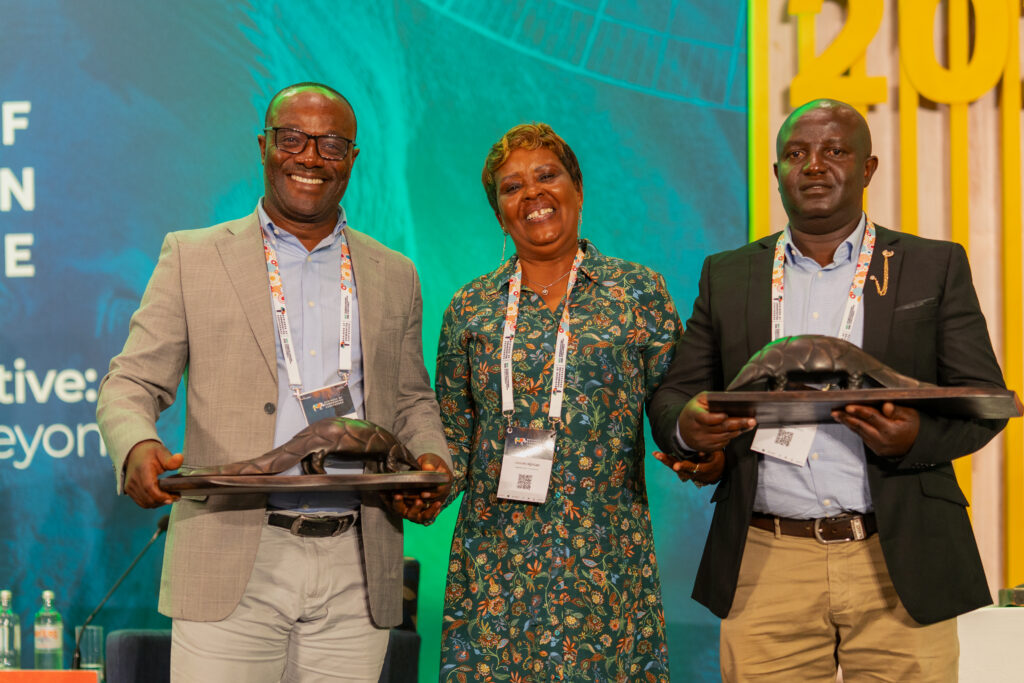
Elvis Kisimir: 2025 Winner of the Diane Skinner Award for the Unsung Hero in Conservation
As a boy growing up near Tarangire, Elvis Kisimir fell asleep to the sound of lions.
By the time he was a teenager, he could go an entire year without hearing a single call.
He knew why. Across the Maasai communities of northern Tanzania, retaliatory poisoning and spearing of lions had become a common response to livestock losses, a cycle of conflict that was quietly emptying the landscape of its predators. Most people accepted it as an inevitable friction between human survival and wildlife. Elvis, who loved lions, chose to see it as a problem worth solving.
When he joined African People and Wildlife in 2010, Elvis brought something no external conservationist could: he was Maasai. He had grown up inside this tension. He understood the grief of losing livestock overnight, the pressure on young warriors to respond, and the particular weight of trust that only comes from shared identity and lived experience. He used all of it to build bridges where there had only been fractures.
He helped establish Warriors for Wildlife, training local men and women not as rangers, but as conflict responders, educators, and monitors embedded within their own communities. The programme now operates across northern and central Tanzania and into Kenya, documenting incidents in real time and building a database that shapes both immediate response and long-term conservation planning across the region.
He was also part of the team that designed the Living Walls programme, reinforced enclosures grown from living plants, rooted in local knowledge, that protect livestock through the night. From a single pilot, Elvis guided its expansion to more than 2,100 living walls, achieving 98% effectiveness against nighttime predator attacks. Among more than 25,000 community members, tolerance for six large carnivore species has measurably and verifiably grown.
Today, Elvis is expanding this model further, adapting Warriors for Wildlife to address rising human-elephant conflict in the Ngorongoro Conservation Area, taking the lessons learned with lions and applying them to one of the continent's most complex and consequential wildlife challenges.
But Elvis will tell you his proudest achievement is not a programme or a statistic. It is watching the next generation of Maasai warriors grow up choosing coexistence over retaliation, seeing conservation not as something imposed from outside, but as something that belongs to them. And it is hearing, once again, the lions of Tarangire calling through the night. More than 600 of them now live in mutual tolerance with the communities and government of one of East Africa's most important wildlife strongholds.
The boy who grew up listening to lions helped bring them back. And the landscape is louder for it.